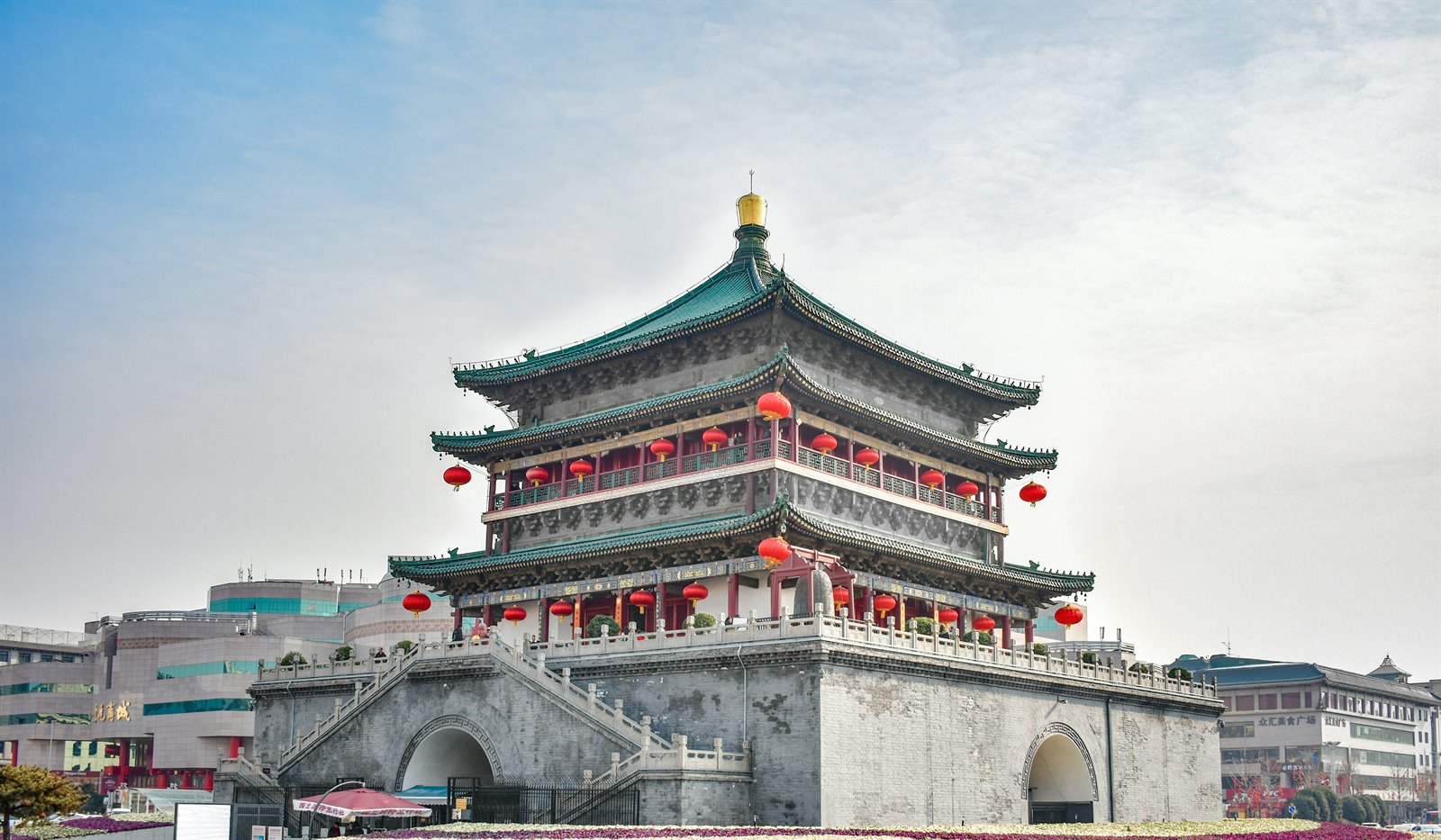
Xi'an feeds you before it introduces itself. We arrived on an overnight train, dropped our bags at the hotel, and walked straight into the Muslim Quarter — a labyrinth of lanes north of the Drum Tower where the air thickens with cumin, chili oil, and the sizzle of lamb on open grills. It was nearly ten at night, and the street was just warming up.
Our first stop was a stall famous for biang biang noodles, named for the sound the dough makes when slapped against the counter. The chef stretched a single belt of noodle wider than my hand, boiled it in seconds, and tossed it with garlic, vinegar, and chili in a bowl the size of a helmet. The texture was chewy, the sauce sharp and smoky — the kind of dish that resets your understanding of what noodles can be. We ate standing up, chopsticks in one hand, plastic bowl in the other, surrounded by locals doing the same.

From there we grazed our way through the quarter: roujiamo, the Shaanxi "burger" of slow-braised pork stuffed into a crispy flatbread; yangrou paomo, a lamb soup into which you tear pieces of unleavened bread yourself; and cold liangpi, slippery rice noodles dressed in sesame paste and cucumber. Each stall had its own queue, and the longest lines invariably led to the best food. A grandmother ahead of us pointed at items on the menu we could not read and we ordered whatever she ordered. We were never disappointed.

The Muslim Quarter has been a centre of Xi'an's food culture since the Tang dynasty, when Persian and Arab traders settled along the Silk Road. The architecture reflects that heritage — mosques tucked between food stalls, Arabic script above doorways, a blend of Central Asian and Chinese flavours found nowhere else in the country. By midnight the crowds thinned and the vendors who had been cooking since afternoon finally sat down to eat their own dinners.
Come hungry, come late, and come with an open mind. Xi'an's street food is not refined or delicate; it is bold, filling, and deeply satisfying — the kind of meal that makes you understand why this city was the gateway to the ancient world. We walked back to our hotel past the illuminated Drum Tower, full in every sense, already planning tomorrow night's menu.