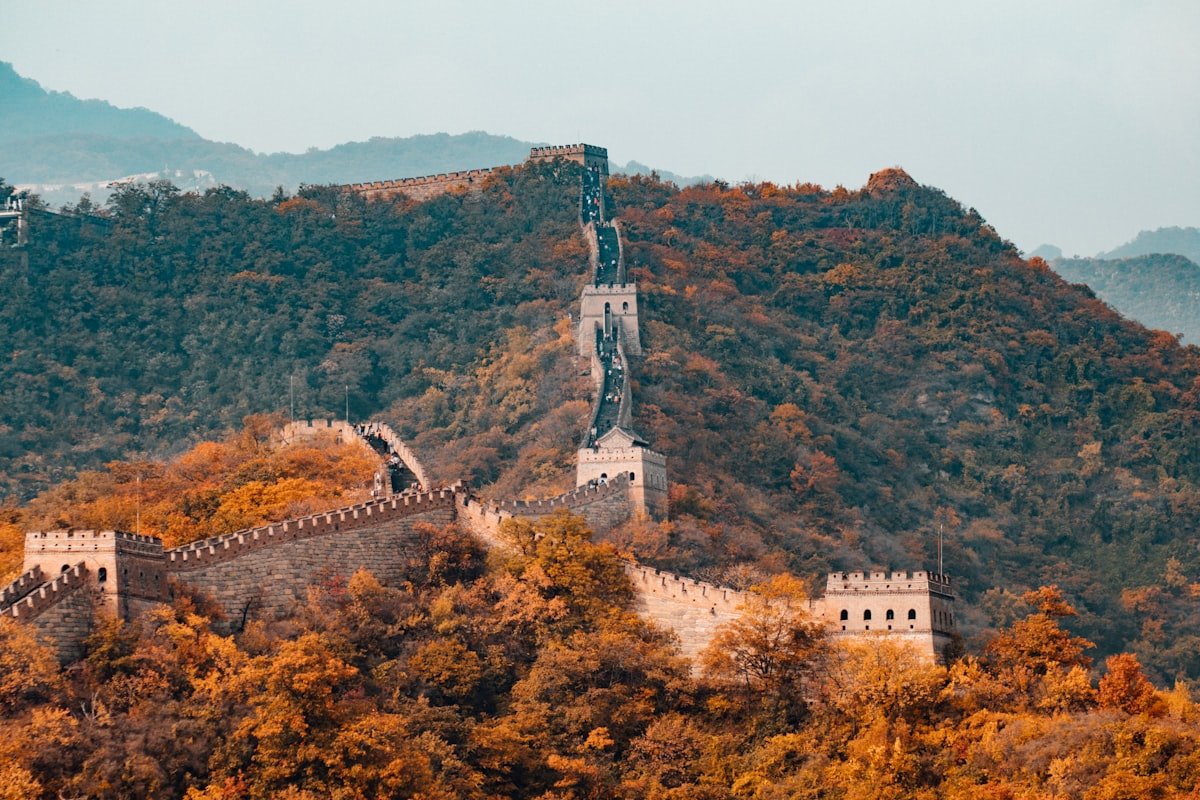
We left Beijing before four in the morning, headlights cutting through a city still asleep. By the time we reached Mutianyu, the parking lot was nearly empty — just a handful of travellers who had made the same quiet pilgrimage. A short cable-car ride later, we stood alone on the ramparts, the wall stretching away in both directions like a stone ribbon draped across the mountains.
Then the sky began to change. First a thin line of gold along the eastern ridge, then a slow wash of pink and amber that crept down the valley. Mist pooled in the hollows below, and for a few breathless minutes the towers appeared to float above the clouds. It is one thing to see the Great Wall in photographs; it is another entirely to feel the cold stone beneath your palms as dawn breaks over a landscape that has witnessed two millennia of history.

Mutianyu is often recommended for its restored sections and relative calm compared to Badaling, but on a weekday morning it feels almost private. We walked south along the battlements, pausing at each watchtower to read the weathered inscriptions and imagine the sentries who once stood watch here. Wildflowers pushed through cracks in the masonry, and swallows darted between the crenellations — reminders that nature has always reclaimed what empires build.


Our guide, a local historian named Wei, pointed out construction techniques from different dynasties: Ming-era brick alongside older rammed-earth foundations. He told us that labourers carried materials up these slopes on their backs, and that entire communities lived along the wall for generations. Standing where they once stood, the scale of human effort becomes tangible in a way no textbook can convey.
By eight o'clock the tour buses would arrive and the magic would thin. But we had already had our moment — that singular, luminous hour when the world's most famous fortification belongs only to those willing to rise before the sun. If you visit China once, make it at dawn. The wall remembers every footstep, and at sunrise it feels as though it remembers yours.