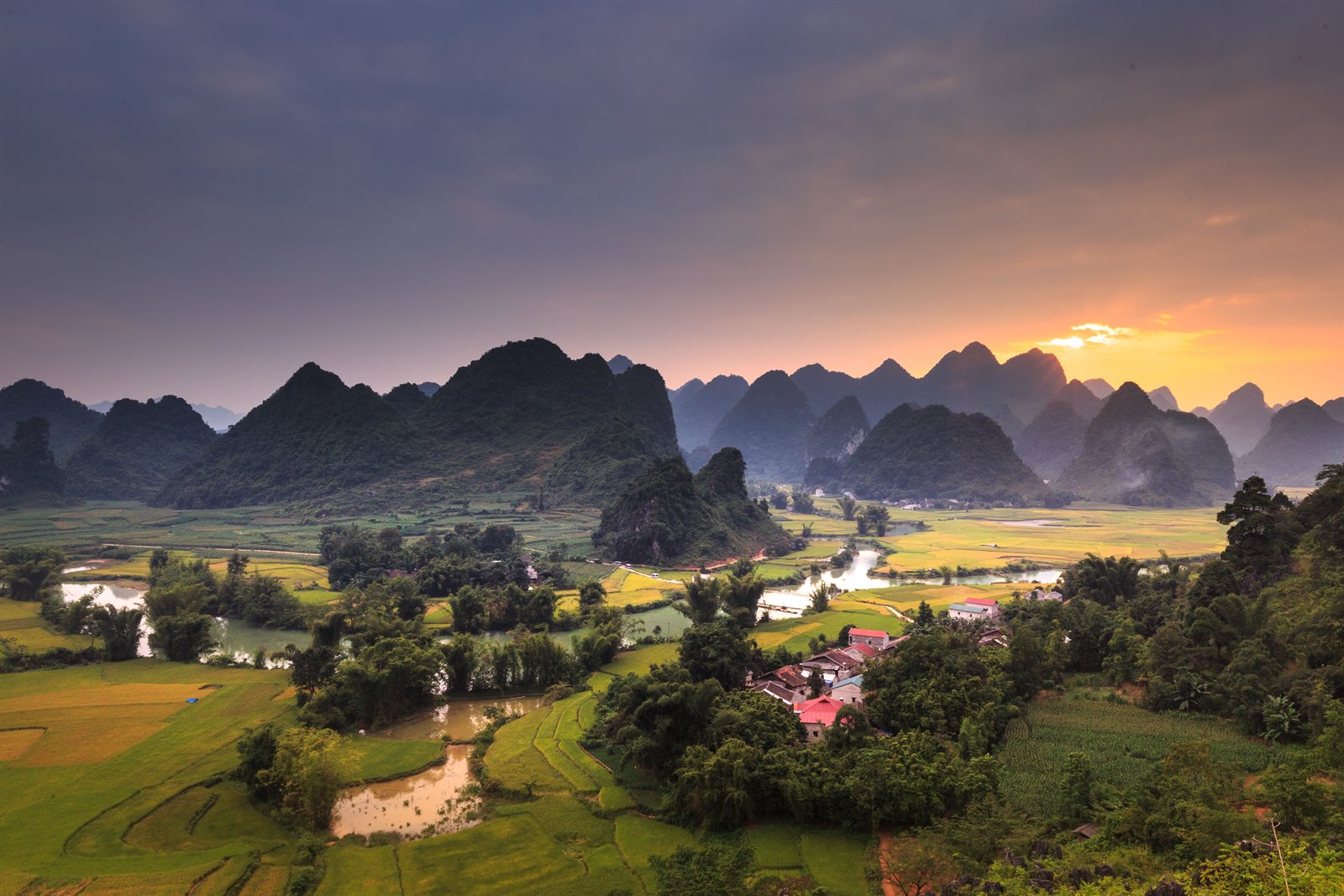
Most travellers see Guilin from a boat or a bus, camera pointed at the famous peaks. But the real landscape lives in the spaces between — in villages tucked into valleys where limestone towers are not scenery but neighbours, where families have farmed the same terraces for generations and the pace of life is measured in seasons, not minutes.
We hired a local guide and a car and headed east from Guilin city, leaving the highway within twenty minutes. The road narrowed, then became a track, then disappeared entirely into a footpath between rice paddies. Our first stop was a Zhuang minority village where wooden houses perched on stilts above flooded fields. An elderly woman invited us in for tea — bitter, locally grown leaves served without ceremony — and showed us photographs of her grandchildren in Guangzhou, the nearest big city four hours away.

Walking between villages, we passed farmers transplanting rice seedlings in ankle-deep water, water buffalo wallowing in mud ponds, and children riding bicycles along embankments with schoolbags bouncing on their backs. The karst peaks rose on every side, close enough to touch, their reflections doubling in the still water of the paddies. It was the same landscape that appears on postcards, but experienced from inside rather than observed from a distance.


We ate lunch at a farmhouse — free-range chicken, stir-fried greens picked that morning, and rice steamed in bamboo tubes over an open fire. Our host spoke no English, but the meal needed no commentary. Afterward we walked to a nearby river where cormorant fishermen demonstrated the ancient technique of fishing with trained birds, though nowadays they fish mostly for tourists willing to pay for the photograph. Even so, watching a bird dive and surface with a wriggling fish in its beak felt like a connection to a way of life that predates the modern world.
Guilin's countryside does not advertise itself. There are no ticket gates or souvenir shops in these valleys — just quiet roads, warm hospitality, and a landscape so beautiful it has become almost invisible through overfamiliarity. Venture beyond the cruise boats and you will find the China that most visitors miss: patient, pastoral, and profoundly alive.